

Overview
An essential component of any long-term ecologically-focused research site is baseline information regarding site biodiversity, particularly for the vegetation which both shapes and reflects site conditions and changes. Led by Erin O'Connell in collaboration with Doug Ladd and the Missouri Botanical Garden, the Tyson Flora Project aims to compile historic records and create a current master list of Tyson’s vascular plant species, from rare orchids in a remnant glade to weeds in the lab lawn. In other words, we set out to ask one simple question: Which plant species grow at Tyson?
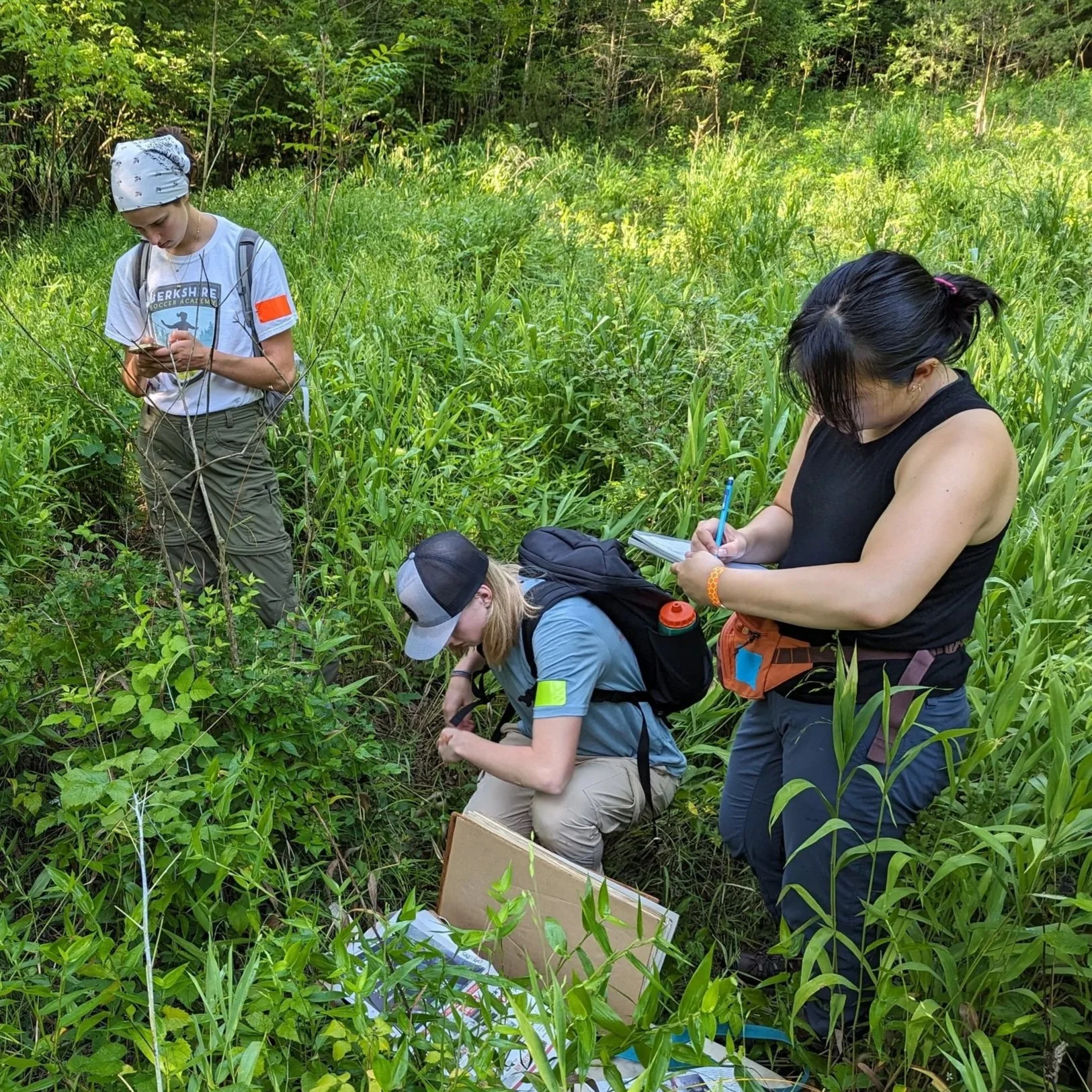
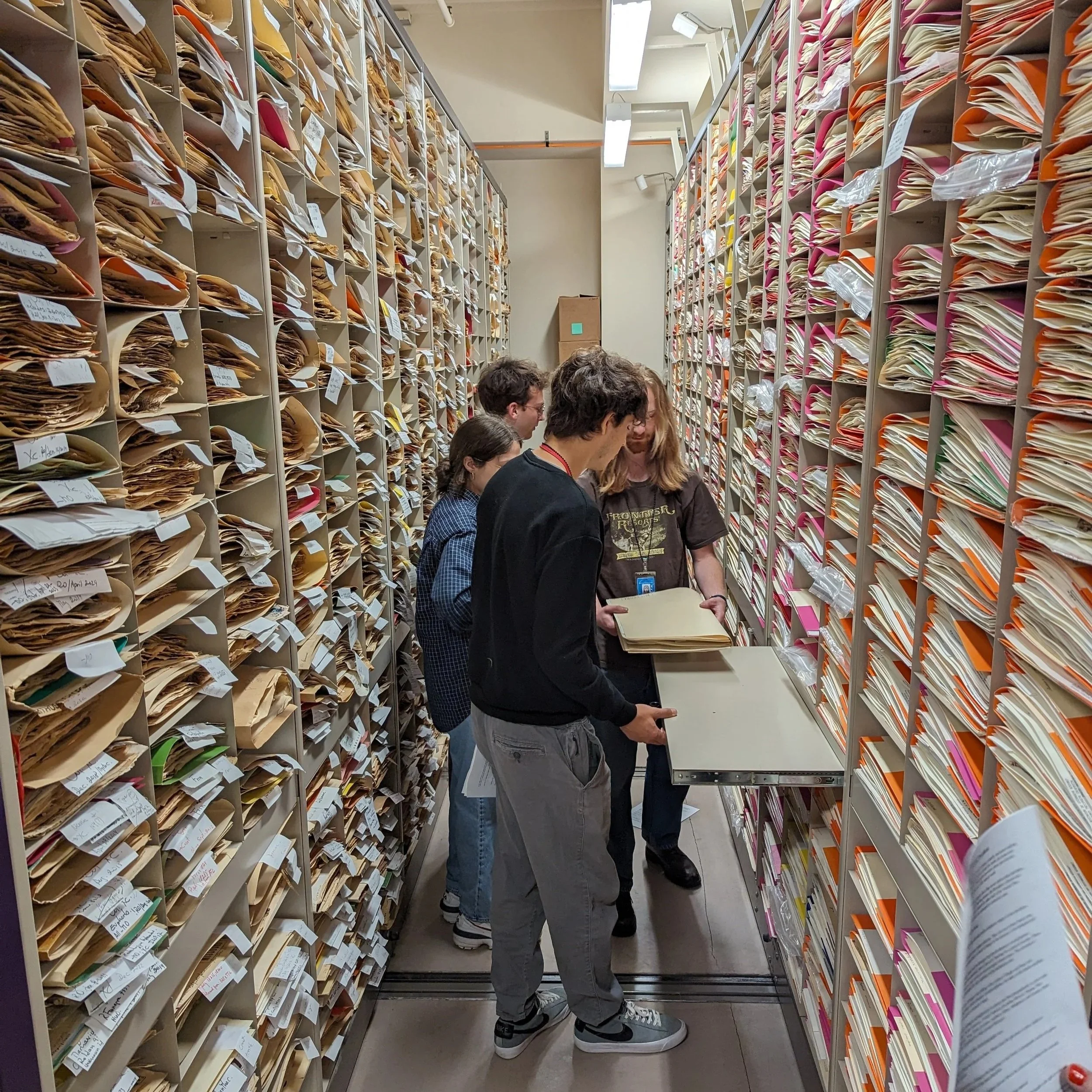
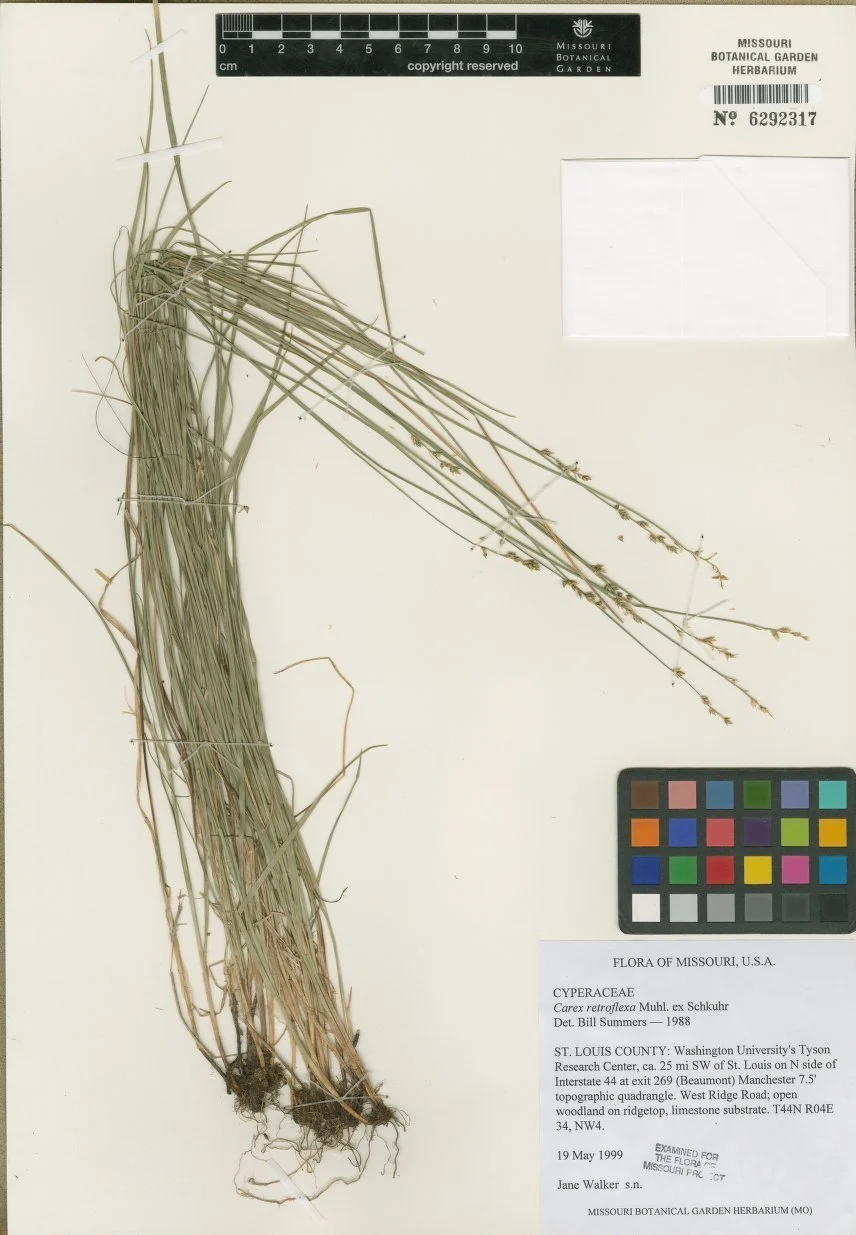
Tyson Flora Project goals
Create a verified and documented list of all vascular flora of Tyson Research Center. This list is supported by permanent voucher specimens (geolocated, pressed, and preserved plants) stored in the Missouri Botanical Garden Herbarium.
Assess plant communities. Along with a species list, we are documenting information about habitats, abundance, distribution, and nativity of each species observed to better inform habitat classification and land management at Tyson.
Provide educational experiences in botany for undergraduate research fellows. The project includes intensive training for student fellows in field botany, plant identification, and planning and implementing biological inventories. Fellows also learn about herbarium collections management through behind-the-scenes shadow days at the Missouri Botanical Garden.
Integrate archival and digital plant diversity data, from 1900 to present. We are compiling historic plants lists to create a list of species expected at Tyson. Additionally, we are confirming identification of vouchers collected at Tyson as early as 1900 and archived in the Missouri Botanical Garden Herbarium. New vouchers collected for the Flora Project are linked to iNaturalist observations, which include coordinates and photos.
The Tyson Flora project will result in a critical resource for ecological monitoring, research activities, land management, and conservation efforts. The flora provides a baseline record and biotic snapshot against which to assess compositional changes over time. Researchers can reference the flora while designing studies and experiments, and identifying species in study plots. The flora will also inform conservation practices at Tyson and regionally by identifying potential problematic invasive species and species of conservation significance. As an aggregate profile of natural quality and recoverability, the flora can help assess expectations for conservation.
Approach
In order to document plant diversity across Tyson’s 2,000 acres, we are visiting unique areas of topography, geology, and habitat type, such as glades, bluffs, old fields, springs, and ponds. We are also conducting walkthrough surveys in each Tyson area to catalog diversity in the dominant oak-hickory forest. (Areas were designated by the military based on road locations and irrespective of habitat type.) Furthermore, we are visiting sites throughout the growing season to capture seasonal variation in plant communities. Historic plant lists inform our expectations for species presence at Tyson and we target locations and times of year based on previously observed species.
Project Progress
You can follow our voucher collection progress on the Flora of Tyson - iNaturalist Project Page and learn more about this project and its origins in Colleen McDermott’s article, Flora of Tyson Project Catalogs Plant Biodiversity.
Highlights from work completed so far
1200+ vouchers collected
600+ species vouchered and processed; additional accessions ongoing
ca. 850 taxa expected based on current and historic lists
100+ species new to Tyson
2 species newly documented in Missouri: Phellodendron amurense & Kolkwitzia amabilis
107 plant families represented
28% of all MO species represented in Flora
A huge thank you to everyone who has made the Tyson Flora project possible so far, especially the student researchers listed below. Thank you to Jordan Teisher, Lauren Boyle, Sally Bommarito, and their teams for facilitating educational experiences at the Missouri Botanical Garden. Thank you to James Trager, Justin Thomas, and Melissa Briggler for sharing their expertise.
2023
Clara Chavez-Ives
Washington University in St. Louis, Environmental Analysis ‘24
poster
Sophia Crowley
Washington University in St. Louis, Biology ‘24
Emma Diaz
Washington University in St. Louis, Environmental Analysis ‘24
poster
Emmett Kearns
Washington University in St. Louis, Biology ‘24
poster
2024
Sam Helmkampf
Washington University in St. Louis, Environmental Analysis ‘25
poster
Dash Martin
Washington University in St. Louis, Environmental Analysis ‘25
poster
Diana Schwartz
Saint Louis University, Environmental Studies ‘25
poster
Wilson Tryon
Washington University in St. Louis, Anthropology: Global Health and Environment ‘24
poster
2025
Erin Prein (Technician)
Washington University in St. Louis, Environmental Earth Sciences ‘25
Diana Schwartz (Technician)
Saint Louis University, Environmental Studies ‘25