
research team mentors

Principal Investigator
Rachel Penczykowski, PhD (Biology)
Assistant Professor of Biology
Washington University in St. Louis
Research website: penczykowskilab.com
Email: rpenczykowski@wustl.edu
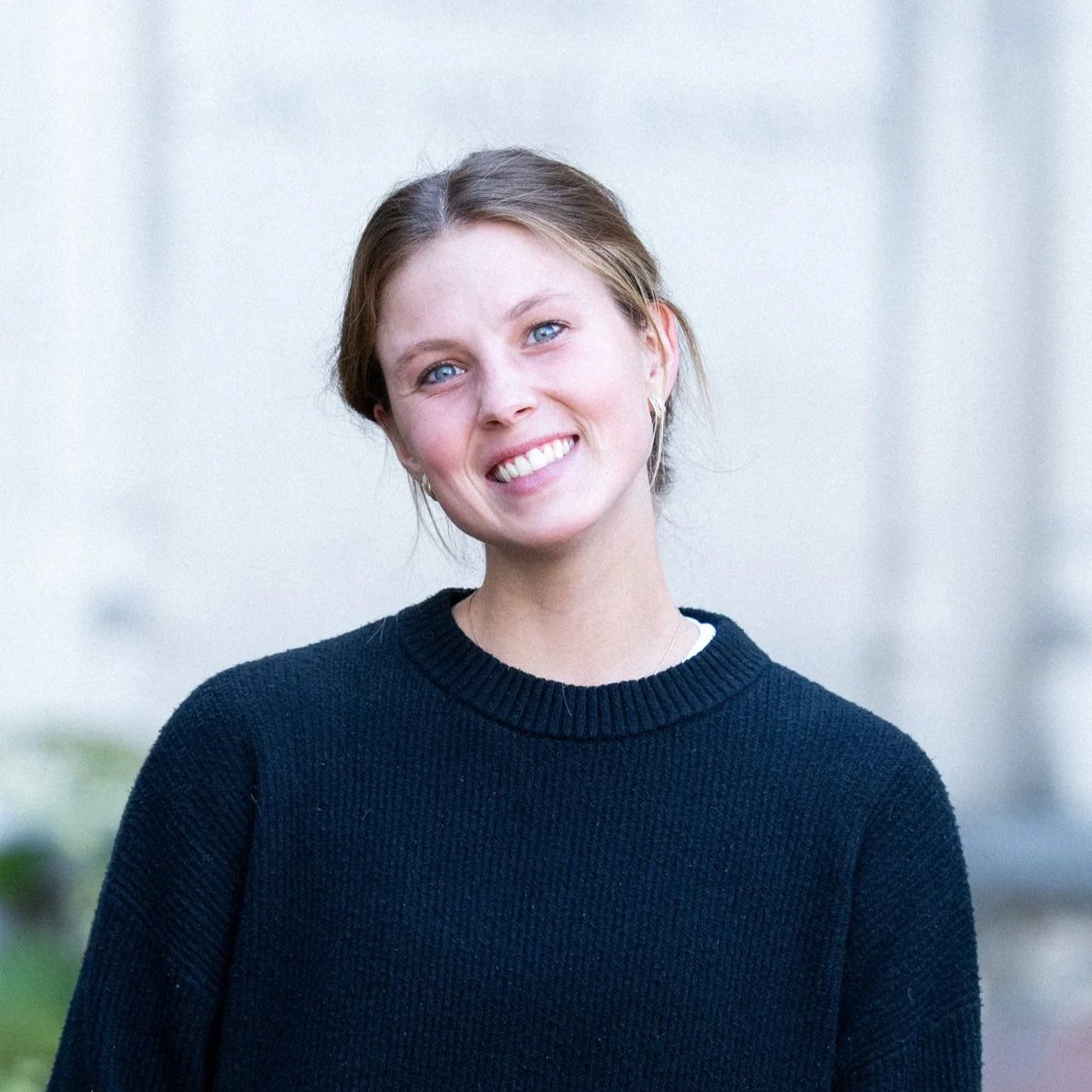
Grace (Coppinger) Sinclair, BS (Biology)
PhD Candidate, Ecology and Evolutionary Biology
Washington University in St. Louis
Research website: gracecoppinger.github.io
Email: coppinger@wustl.edu
Research focus for summer 2027
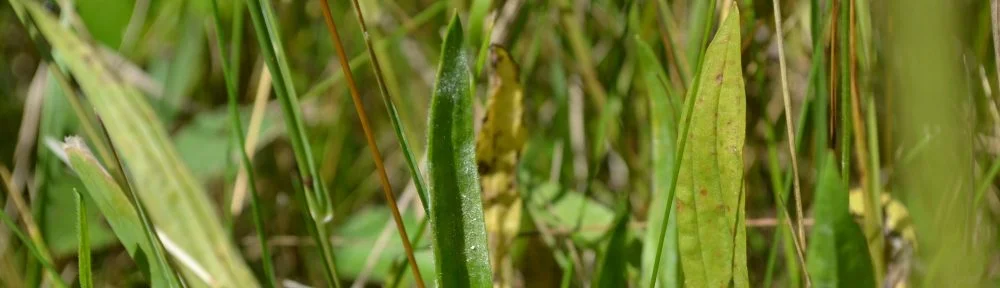
Our research group seeks to understand how environmental variation affects the ecology and evolution of infectious diseases, and how diseases can impact the ecosystems in which they occur. We use common weedy plants (Plantago species) and their fungal pathogens (powdery mildews) as a model system for investigating environment-disease interactions.
Important questions we ask include:
How does large-scale latitudinal variation in winter climate drive variation in the prevalence and diversity of fungal parasites?
How does variation in land use context (e.g., urban, suburban, rural) and microhabitat (e.g., shade) affect plant population ecology and plant-pathogen interactions?
How do parasites affect flows of energy and nutrients through food webs and alter ecosystem processes?
This summer, our team will focus on two projects:
Evaluation of the accuracy of fine-scale species distribution model predictions of Plantago species along an urbanization gradient: Urbanization can fundamentally reshape species distributions by altering habitats, climate, and biological interactions across local and global scales. Species distribution models (SDMs) combine observations of species occurrence or abundance with environmental predictors to identify areas of suitable habitat. Although SDMs are widely used to assess the impacts of climate change on suitable habitat at regional and global scales, applications at finer spatial scales remain less common. This limitation is particularly relevant in urban environments, where substantial environmental heterogeneity occurs over relatively short distances. This project aims to evaluate the accuracy of fine-scale SDM predictions of Plantago lanceolata, Plantago major, and Plantago rugelii species occurrence and absence along an urbanization gradient. Students will visit selected sites identified by an existing SDM developed by PhD candidate Grace Sinclair to collect independent field observations of Plantago presence and absence. Evaluating model predictions against independent observations will help establish whether fine-scale SDMs can reliably predict suitable habitat within cities.
Climate and connectivity as drivers of pathogen dynamics within and between urban plant populations: Urban life presents many challenges for animals and plants. Roads and buildings divide the landscape into small patches of vegetation in parks, yards, and gardens. Species in those habitats are in close contact with humans and vehicles. Cities also produce and trap more heat than surrounding areas. Habitat fragmentation, human activity, and warming can each impact the risk of disease for organisms. However, it is unknown how these factors alter the spread of disease in urban systems. This knowledge gap hinders prediction and management of disease for urban wildlife and plants. To fill this gap, our lab is using a combination of mathematical models, field studies, and experiments. This summer, our Tyson team will perform monthly surveys of Plantago populations in parks along an urbanization gradient in the St. Louis region. This will be our 9th year of data collection at those sites, so we are learning about drivers of year-to-year variability in the plant populations and their rates of powdery mildew infection.
In addition to contributing to this ongoing research, students will develop independent SDM projects investigating other weedy plant species, such as white clover, in St. Louis or evaluating Plantago populations in other cities with sufficient citizen science data available on iNaturalist. With guidance from Grace, students will formulate research questions, generate predictions, compile occurrence data from citizen science databases, and develop their own models. This research addresses a gap in understanding the effects of urbanization on plant species occurrence and local abundance, which has received far less attention than effects of urbanization on plant richness. Furthermore, incorporating environmental and anthropogenic predictors at fine spatial resolutions can capture variation within and across cities and help understand how urban planning influences weedy plant distributions.
Skills
techniques
methods
Members of our team will work together to carry out multiple projects investigating environment-disease interactions, and we seek a group of students with diverse backgrounds, interests, and personalities. Students on our team can expect to develop a suite of skills in observational and experimental field research, data analysis, and teamwork, and will receive training and mentoring including in the following areas:
Field surveys
Identification of common weedy plants and their fungal pathogens
Vegetation survey techniques
Use of a Robotany automated aerial imaging apparatus to take high-resolution photographs of replicate 1 x 1 m field plots in each site
Field experiments
Manipulation and measurement of key environmental variables (e.g., temperature, humidity, and light levels)
Methods for inoculating plants with powdery mildew
Measurement of plant traits including leaf size, flower development stage, and severity of damage from disease and herbivory
Data collection, management, and analysis
Best practices for documentation in field and lab notebooks and datasheets
Best practices for data entry and curation in Excel
Data analysis using R
Teamwork and communication skills
research conditions
Students can expect to be in the field 85% of the time and lab 15% of the time. Indoor lab activities will include: (1) identifying plant pathogens under a dissecting microscope, (2) data entry and proof-reading, and (3) data analysis towards independent projects.
Field conditions will be primarily in short vegetation in open habitats. Students will need to take precautions against ticks, mosquitoes, and sunburn.
In addition to work performed at Tyson Research Center, there will be many days where the team travels to off-site locations to collect field data. These off-site locations include public parks in the City of St. Louis and St. Louis County, as well as Shaw Nature Reserve.
Team structure and opportunities for individual research
Our team will include PI Rachel Penczykowski, PhD candidate Grace Sinclair, and 2 undergraduate research fellows. We will have weekly team meetings. Our team will work collaboratively on all projects, with supervision by the research mentors. Each student will present a poster at the Tyson Summer Research Symposium at the end of the field season.
We encourage motivated students to pursue individual research projects. These can include: (1) data collection, data analyses, and/or data syntheses that lead to a research poster presentation at the Washington University Undergraduate Research Symposium; (2) independent research for course credit (BIOL 200 or BIOL 500) in the fall or spring semesters; and (3) senior honors theses that lead to research presentations at professional conferences and/or peer-reviewed publications. Students interested in senior honors theses should contact Rachel Penczykowski prior to the start of the field season.